


A story about Ashmead Care Home, Maria Mallaband, Putney
How do you refurbish a care home… when people actually live there…
Refurbishment in a care home is one of those things that sounds straightforward until you picture it happening and the one hundred people who live there.
People do not just visit a care home.
They live there.
They rest, recover, form relationships, build routines, and call it home.
For many, the idea of refurbishment conjures up images of chaos: dust sheets over everything, early morning drilling, wet floor signs in every room. A building site with people who are trying to live their everyday lives in the middle of it.
Ashmead Care Home in Putney knew that it could not, and would not, be their story.
A Person-Centred Approach to Care Home Refurbishment
From the beginning, a promise was made to never feel like a construction site. This is where we care for people; it’s a home, and it will be treated that way.
Things were done gently, to not disturb routines as much as possible. Bedrooms, for example, were decorated just two at a time. This allowed changes to happen at a pace that felt safe and familiar.
Why Refurbish a Care Home? What Was the Purpose?
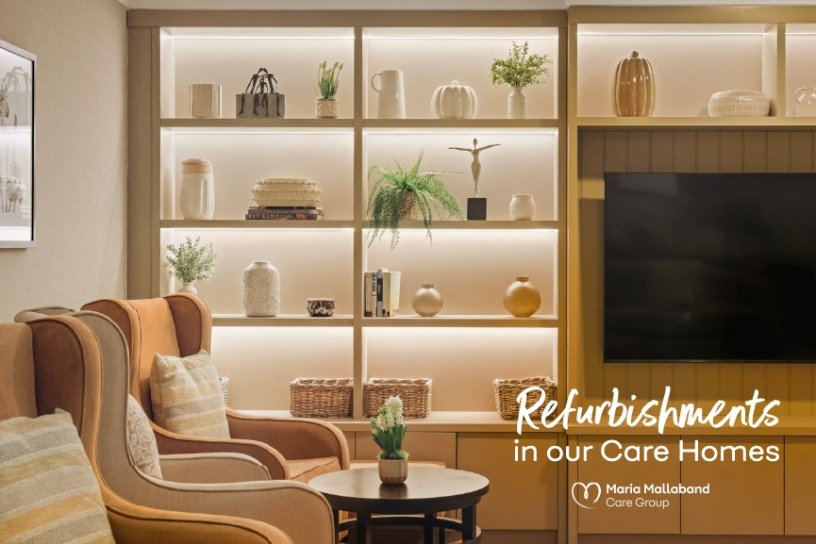
Ashmead looks incredible, lighter, calmer, more serene.
But the truth is, Ashmead was never about making the home look “modern” for the sake of it. It was about the details that genuinely change lives. Specialist carpets have been added to all communal areas, making them quicker to clean and helping reduce infection risks. Softer furnishings now help keep noise levels down, creating a calm, relaxed atmosphere that feels homely rather than hotel‑like. Thoughtful layout changes have been made throughout to make day‑to‑day living easier and more enjoyable. We’ve introduced a brand‑new lifestyle suite where people can choose from a range of activities like massages, pedicures, and hair appointments at the salon. Every update has been designed to improve safety without losing that warm, welcoming, home‑from‑home feel.
Because the goal wasn’t to change Ashmead. It was to strengthen it.
The challenge?
The refurbishment itself, the painting, the flooring, the furniture, that was the easy bit. The real challenge was safeguarding the comfort, dignity, and routines of 100+ people who live, work, and spend their days here. Every decision was made with one question in mind:
“Will this better the lives of the people who live with us?”
If something disrupted the environment too much, it paused. If something could be done more gently, it changed.
Comfort and safety always came before speed.
Choices?
One of the most meaningful parts of the process was simply… asking.
The people who lived shared what they liked, disliked, what they wanted to see more of, and what made the space feel like their home.
Because a refurbishment shouldn’t wipe away what is familiar. It should protect what is already there and reflect the people who call the home their own.